

Meet Our Founder
Acclaimed Tutoring opened in 2006 to help students gain a voice through education and research…
My name is Russ Hanush. I am a family oriented college prep tutor providing the highest quality help to entire generations of families, from middle school through college. My services focus on the top three areas college admissions offices look at: good grades, tough courses, and outstanding SAT and ACT scores. My approach is holistic: success in their classes is the best preparation for the admissions tests. Acclaimed Tutoring helps with the toughest classes, supplementing their coursework with testing strategies, important material the schools don’t cover, and highlighting material that is most relevant to the ACT and SAT tests.
Russ Hanush is the founder of Acclaimed Tutoring. He served for almost two decades at America’s national laboratories in Livermore, CA, working in nuclear physics for the Atomic Vapor Laser Isotope Separation program (AVLIS) at Lawrence Livermore National Laboratory, and in chemical kinetics at Sandia National Laboratory’s Combustion Research Facility where he became a leading expert in supercritical water oxidation (SCWO) reactors. He is also the inventor of The Periodic Table of Dimensions. In 2006 he opened Physics Phor Phun Tutoring, now known as Acclaimed Tutoring, to help families prepare their students for life after high school, whether their interests are collegiate, vocational, or entrepreneurial. By bringing his real-world STEM expertise to teaching he has helped hundreds of families and students achieve their dreams.
The Periodic Table of Dimensions
Since 1997
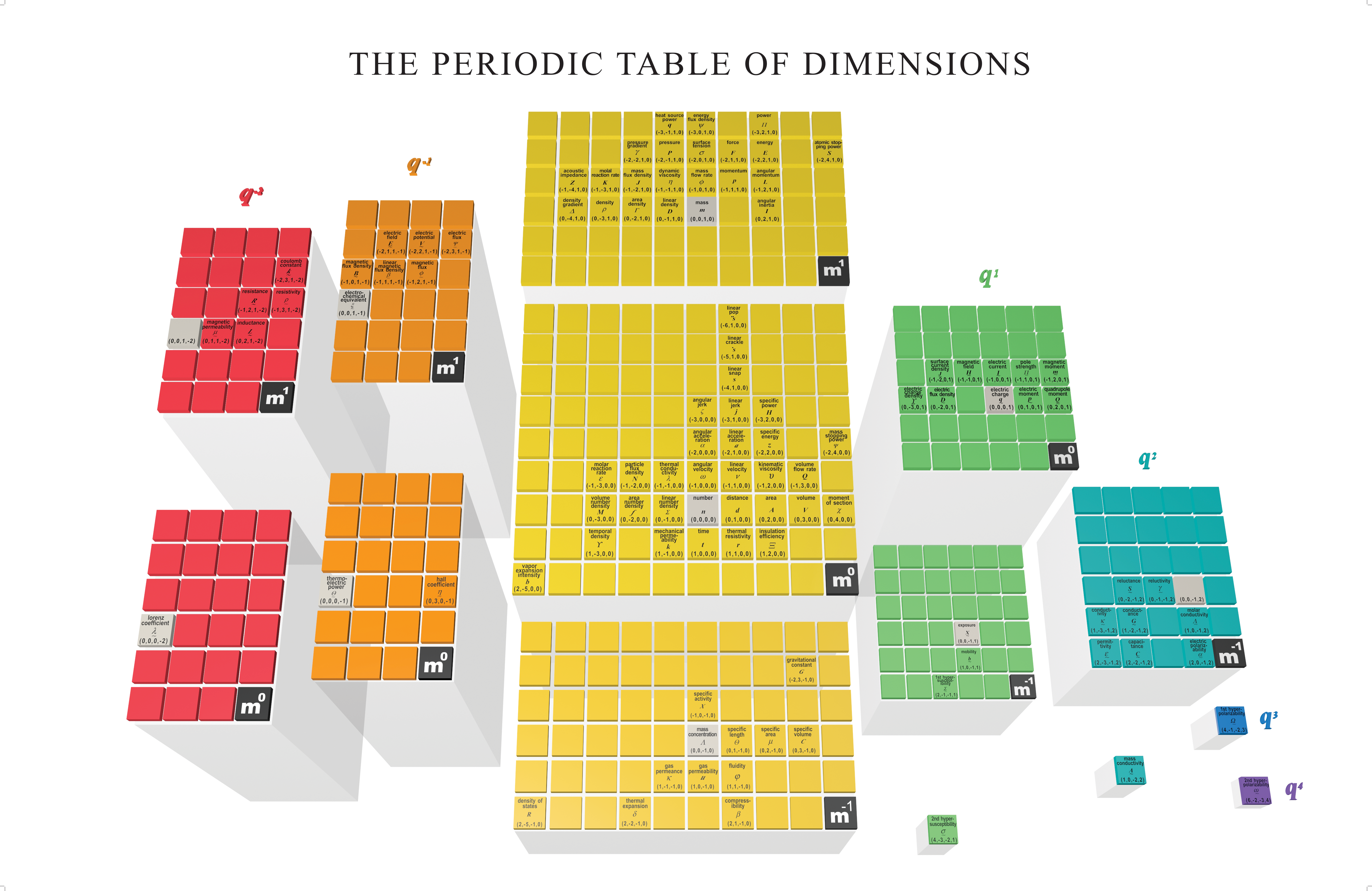
The Periodic Table of Dimensions, conceived of in 1997, provides a tabulated structure for representing every physical measurement in the scientific literature, and the mathematical relationships among those measurements. The Periodic Table of Dimensions is much more than just a table, it is also a vector space: the space of Buckingham’s Pi-theorem and dimensional analysis.
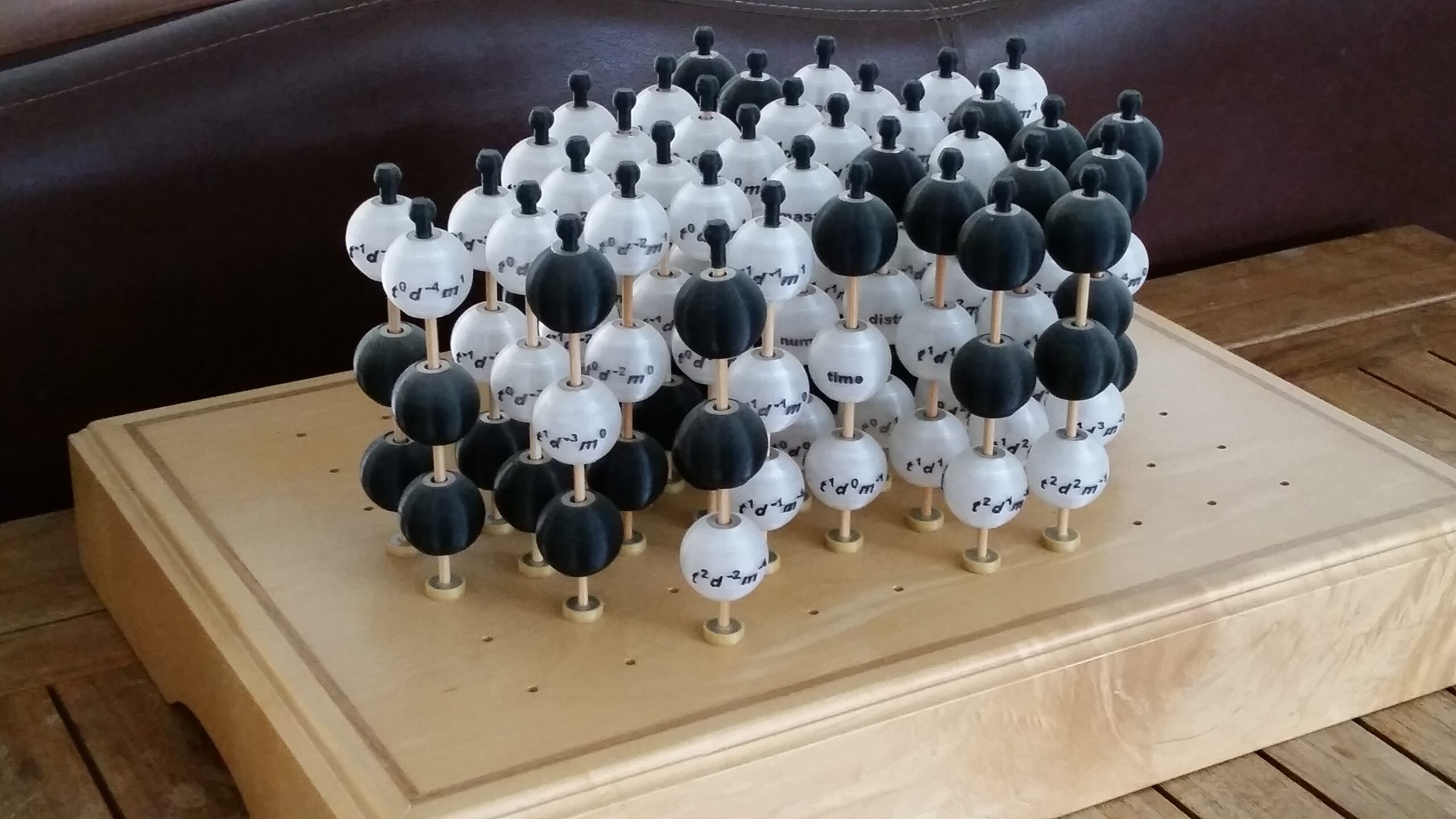
The full 4D table presented in the paper A Periodic Table of Dimensions is shown above. Both 2D and 3D representations of a three-dimensional “rationalized” system have also been explored. A 3D-solid version, shown below, consists of 3D-printed plastic spheres floating on magnetic fields. The development of this rationalized system is documented in the paper Rational Dimensia. A Catalog of Synonymous Dimensions shows the overlapping dimensionality of the more than 900 measurements incorporated into the Periodic Table of Dimensions. Further research on applications of the Dimensional Coordinate System (DCS) on which the Periodic Table of Dimensions is based is documented in the paper Gravitating Sine Waves, General Relativity, And The Golden Ratio.
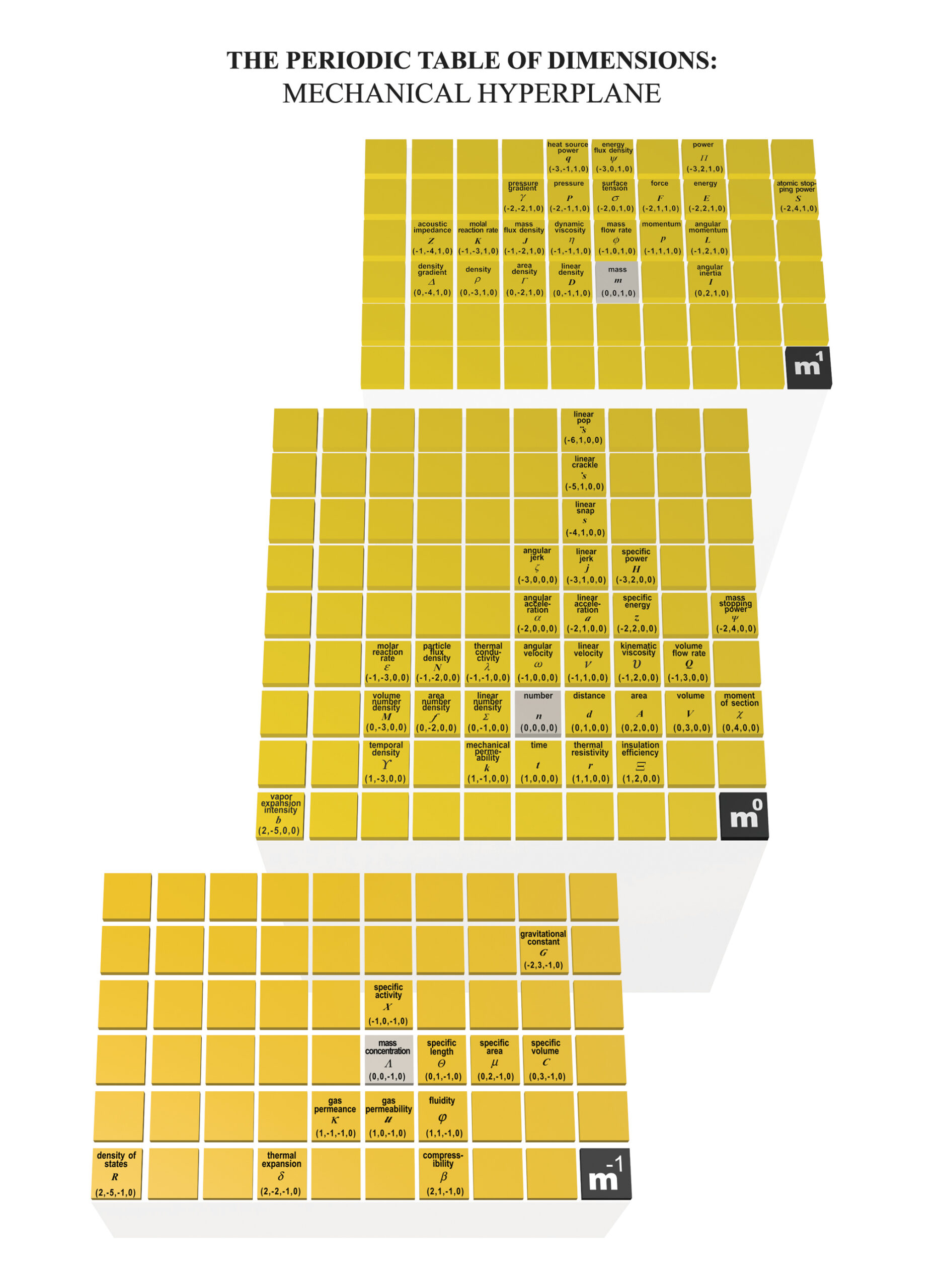
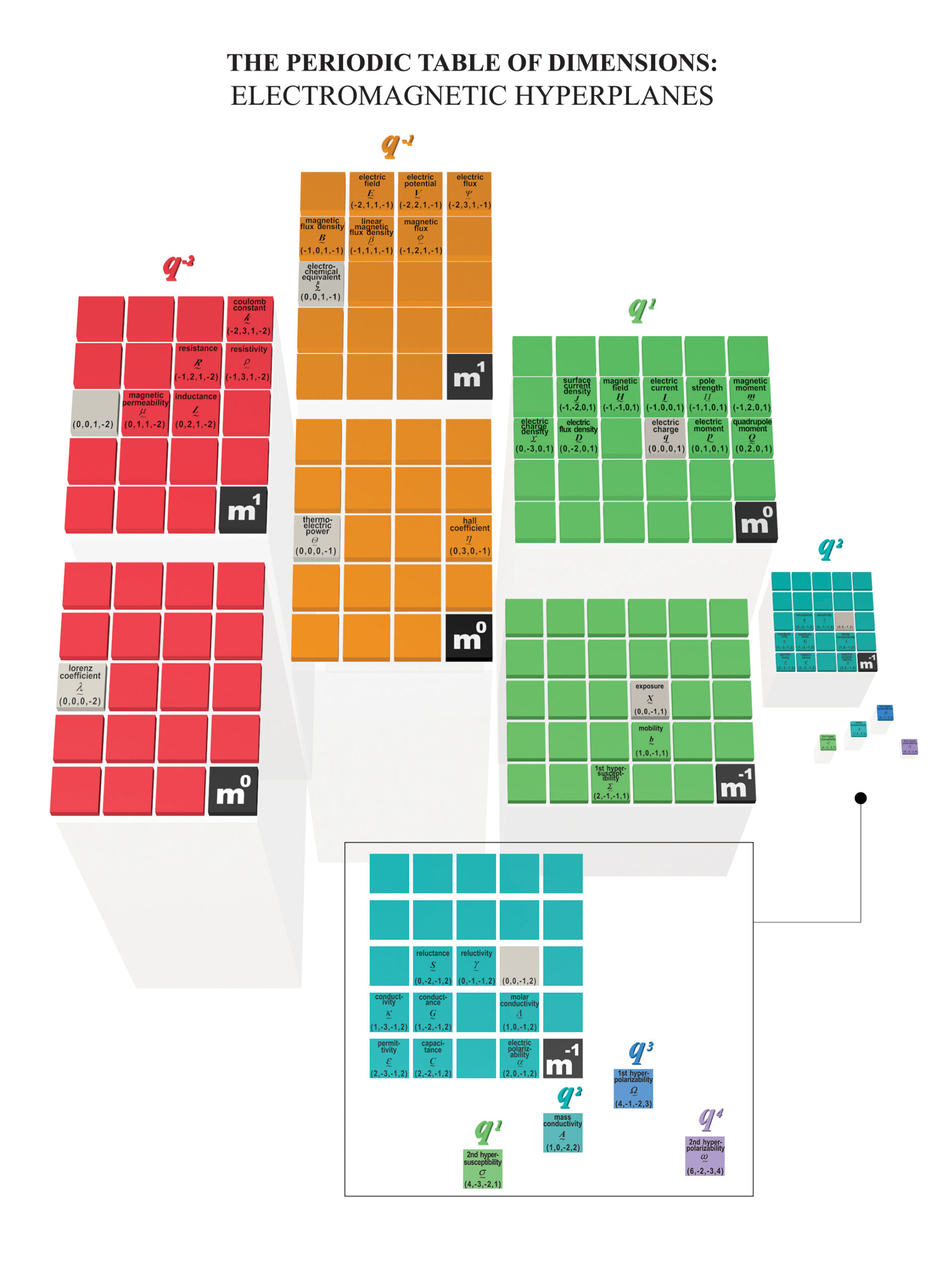
The periodic table of dimensions can be further broken down into its individual hyperplanes. One such arrangement is shown below with the table broken down into the mechanical hyperplane and the electromagnetic hyperplanes.
Articles by Russ Hanush:
On The Periodic Table of Dimensions…
On analytic chemistry…
On engineering…
We Provide Quality Education To Help Students Reach Their Full Potential
A Happier, More Confident, More
Successful Student – Guaranteed!
 (805) 610-1725
 5005 Almond Dr., Templeton, CA 93465
Leave a message. We’re here to help!